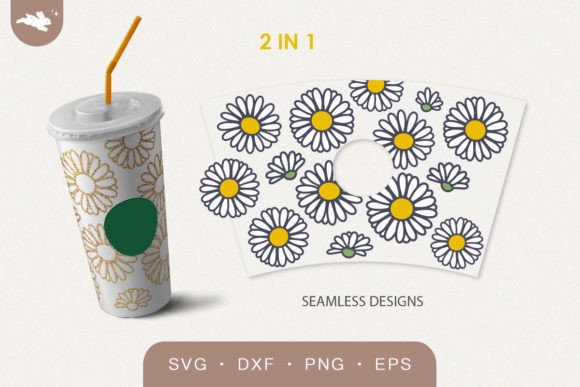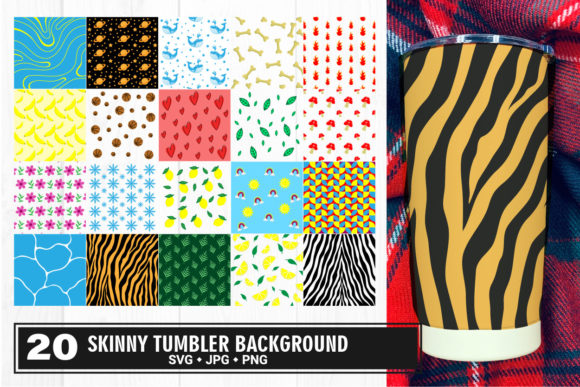
Skinny Tumbler Wrap Background SVG
First Impressions: Minimal, Modern, and Made for Movement
Opening the Skinny Tumbler Wrap Background SVG zip file, I immediately noticed how cleanly it breathes—no visual clutter, no forced symmetry, just a slender, vertical rhythm that echoes the curve of a tumbler or insulated cup. It’s not a full-wrap design in the traditional sense; rather, it’s a subtle, repeating motif that suggests continuity without demanding it. Think delicate vines, fine geometric lines, or minimalist botanical stems—designed to sit gracefully along the narrow side of a custom embroidered tote bag or a slim apron pocket. This isn’t a bold statement piece—it’s an understated frame, a quiet foundation that lets monogrammed initials, small logos, or hand-stitched names shine.
Where It Lives Best: Real Projects, Not Just Pixels
Last week, I prepped a batch of linen tea towels for a local café’s holiday pop-up. I used the Skinny Tumbler Wrap Background SVG as a border element along the bottom hem—not as the main attraction, but as a refined anchor beneath each towel’s embroidered name tag. The result? Customers kept commenting on how “thoughtful” and “deliberately crafted” the towels felt—not because the background was loud, but because its consistent scale and clean spacing signaled intentionality. That’s the quiet strength of this design: it elevates handmade product perception without competing with the focal point.
I’ve also tested it on lightweight cotton sweatshirts (for baby embroidery), curved cap fronts (with careful hooping), and even folded pillow covers where the wrap naturally follows the seam line. In every case, the Skinny Tumbler Wrap Background SVG held up visually—no distortion, no awkward gaps—because its proportions respect real-world fabric behavior. It’s built for flow, not rigidity.
Where to Pause—and Plan Ahead
This isn’t a one-size-fits-all embroidery file. Its narrow profile works beautifully on smooth, stable fabrics like quilting cotton, twill, or midweight linen—but tread carefully on stretchy knits or textured fleece. Without proper stabilizer (a medium-weight cutaway or tear-away, depending on your base fabric), those fine lines can blur or pucker during stitching. On dark fabric, test thread color contrast early: light gray or ecru satin stitch reads softly, while navy or charcoal fill stitch adds grounded elegance—but both need verification against your actual substrate.
Small hoop sizes (especially under 4” height) require trimming the design vertically before digitizing. Don’t force the full repeat into tight space—edit thoughtfully. And if you’re planning commercial embroidery for Etsy sellers or boutique branding, confirm whether your machine embroidery software handles the SVG cleanly for auto-digitizing—or whether you’ll need to manually adjust stitch density in your embroidery editor. Overly dense fill areas in narrow zones can cause thread breaks or fabric tension issues, especially on thin cotton or baby onesies.
Design Notes Every Embroidery Designer Should Keep Handy
- Always test on scrap fabric first—especially when pairing with textured or dark materials.
- Review stitch density before sending to your machine. A light running stitch outline often balances heavier fill sections better than uniform saturation.
- Confirm hoop size compatibility—this design thrives in vertical orientation, so double-check your hoop’s usable height before loading.
- Inspect small details at 200% zoom in your embroidery software. Tiny loops or overlapping paths may need cleanup before stitching.
- Test black-and-white mockups alongside color versions. Contrast clarity matters more than vibrancy for craft business listings.
- Compare light and dark fabric backgrounds using printable mockups—this helps clients visualize final product value before ordering.
- Use appropriate stabilizer: cutaway for stretchy or unstable fabrics, tear-away for stable wovens, and optional topping for napped textures.
- Verify licensing terms before selling finished items or bundling the Skinny Tumbler Wrap Background SVG into digital embroidery kits—commercial use permissions vary by seller.
Why It Builds Trust—Not Just Decoration
Customers don’t buy backgrounds. They buy confidence—in craftsmanship, consistency, and care. When I used the Skinny Tumbler Wrap Background SVG as part of a set of personalized baby embroidery pieces (onesie + burp cloth + blanket corner), parents responded most strongly to how “cohesive” the collection felt—not because everything matched exactly, but because the shared rhythm created visual harmony. That’s brand consistency in action: subtle, repeatable, and human-scaled.
For Etsy sellers and small shop owners, this design supports storytelling. It doesn’t shout “handmade”—it whispers it, through precision, proportion, and restraint. That whisper builds trust faster than any sales copy. And for creative entrepreneurs building digital product libraries, it’s a versatile asset: easily recolored, layered under text, adapted for patches or applique designs, or repurposed as a border in printable mockups for social media previews.
A Final Thought: Design Is Context, Not Just File Format
The Skinny Tumbler Wrap Background SVG isn’t magic—it’s thoughtful scaffolding. Its value emerges only when paired with smart decisions: the right stabilizer, the right thread weight, the right fabric choice, and the right moment to let it play support instead of center stage. As a machine embroidery design, it’s lean and adaptable. As a graphics asset, it bridges digital flexibility with tactile realism. And as a craft business tool? It quietly raises the bar—not by being flashy, but by being consistently, reliably, beautifully *considered*.